

What Homeowners Should Know Before the Coldest Months Hit
Winter is the hardest season on your home’s water heater, and most homeowners don’t realize it until they’re standing in a cold shower.
Every winter, I notice a recurring issue among many good families: their water heaters fail during the coldest part of the season. This often happens not because they’ve done anything wrong, but because the winter months place more strain on these systems than most people realize.
Why Water Heaters Work Harder in Winter
During winter, incoming water temperatures are at their lowest point of the year. That means your water heater has to work harder and longer just to bring water up to the temperature you’re used to.
The bigger the temperature difference between cold water and hot water, the more energy your system uses. This is especially tough on:
- Older water heaters
- Undersized tanks
- Homes with larger families or heavy daily usage
When a unit is constantly heating cold water from scratch, it creates ongoing stress inside the tank.
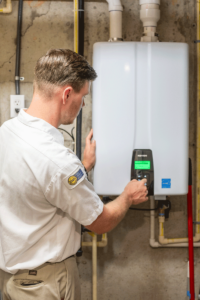
How Cold Weather Shortens a Water Heater’s Lifespan
Every time your water heater heats water, the tank expands. When it cools, it contracts. In winter, this expansion and contraction happen more often and more aggressively.
Over time, that stress can:
- Crack the glass lining inside the tank
- Accelerate corrosion
- Reduce overall lifespan
We see this most often when homeowners are constantly running out of hot water, forcing the system to reheat repeatedly throughout the day.
The Hidden Problem Most Homeowners Never See: Scale Buildup
One of the most overlooked issues we find is scale buildup inside the tank, especially in gas water heaters.
Here’s a stat that surprises most people:
Just ¼ inch of scale buildup can increase energy usage by up to 30%.
Scale acts like insulation at the bottom of the tank. The burner has to work harder to heat through that layer before the water even begins warming. That means:
- Higher energy bills
- Slower recovery times
- More wear on internal components
Warning Signs Your Water Heater Is Nearing the End
Many water heaters don’t fail suddenly; they give warning signs first. The problem is that homeowners often ignore them.
Here’s what I tell people to watch for:
- Lower pressure on the hot water side
- Slower reheating times than you’re used to
- Loud popping or cracking noises while the heater is running
- Water stains or corrosion on the top or sides of the tank
- Frequently running out of hot water
Those noises in particular are important. Extreme popping and cracking often indicate scale buildup or internal stress, and that’s not something to ignore.
The Maintenance Steps Most Homeowners Skip
Almost every manufacturer recommends routine inspections, but most homeowners never realize they’re due.
Two critical components that get ignored most often:
Temperature & Pressure Relief Valve
- Should be inspected at least every three years
- This is a major safety component
Anode Rod
- Also recommended for inspection every three years
- Annual checks are even better
- This rod protects the tank from corrosion
Skipping these inspections allows small issues to turn into full replacements.
The Best Time to Explore Energy-Efficient Options
If you’re thinking about upgrading to a more efficient water heater, including a tankless model, the best time to do so is before your current unit fails.
Emergency replacements limit your options. When you have no hot water, decisions get rushed. Tankless systems require:
- Planning
- Proper sizing
- Electrical or gas considerations
When your current water heater is still working, you have time to explore efficiency upgrades that actually fit your home and usage.
One Proactive Step That Prevents Winter Emergencies
If your water heater is:
- Over 8–10 years old
- Showing warning signs
- Running out of hot water regularly
Get it inspected before winter hits full force.
A proactive inspection can:
- Extend lifespan
- Improve efficiency
- Help you plan a replacement on your terms
Final Thoughts
Water heaters don’t fail more in winter by accident. Cold temperatures, increased usage, and deferred maintenance all occur at the same time.
If you take one thing away from this, please don’t wait for the emergency. A little planning goes a long way toward comfort, safety, and energy savings.
