
Most homeowners assume their air conditioner is either working or it isn’t.
But in reality, there’s a long period during which an AC system keeps running while quietly becoming less efficient. During that time, it may still cool the home, but it’s doing so while using far more energy than it should.
That’s when your AC can start costing you more than you realize.
At Wisler Plumbing, Heating, Cooling & Electric, we often see systems that have been losing efficiency for months before a homeowner calls us. The good news is that many of the warning signs are easy to spot if you know what to look for.
One of the First Signs: Longer Run Times
A healthy air conditioning system should cycle on and off throughout the day to maintain the temperature you set on your thermostat.
If you start noticing that your AC seems to be running almost constantly, that’s often the first sign that something isn’t quite right.
When an AC system has to run longer to reach the same temperature, it usually means one of two things:
- The system is losing efficiency
- The system is struggling to move air properly through the home
Either way, longer run times almost always translate to higher energy bills.
Your Thermostat Struggles to Reach the Set Temperature
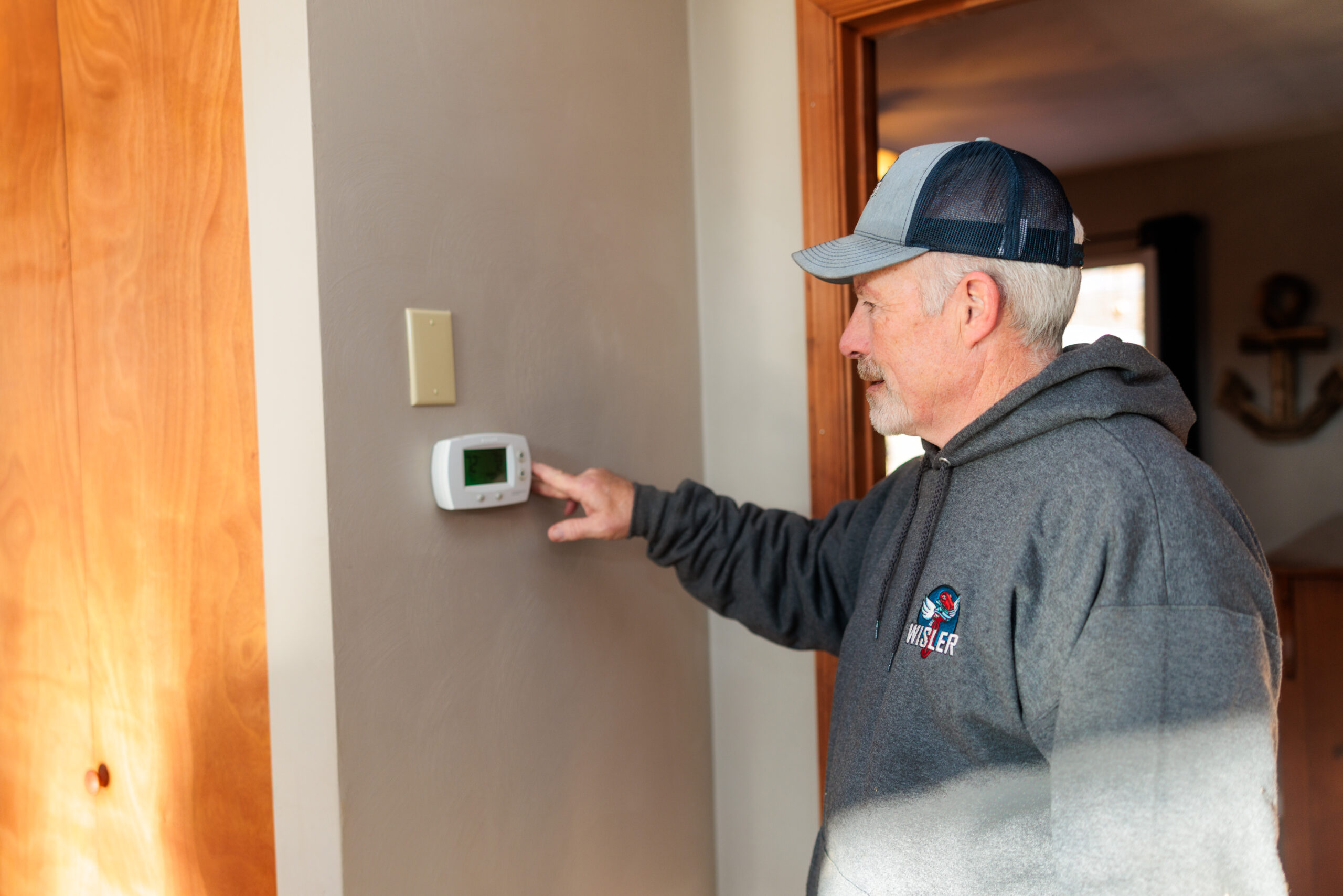
Another warning sign is when the thermostat is set to a specific temperature, but the home never quite reaches it.
For example, if your thermostat is set to 72 degrees but the house sits at 75 or 76 all afternoon, the system may be working harder than it should.
This can happen when:
- Refrigerant levels are low
- Coils are dirty
- Airflow is restricted
- Components inside the system are beginning to wear out
Even though the system is still running, it may be operating inefficiently and consuming more electricity to try to keep up.
Weak Airflow From Your Vents
Sometimes the easiest way to check your system is simply to walk up to a vent.
If the AC is running but you can barely feel air coming out of the vent, there may be an airflow problem.
Weak airflow can be caused by:
- Dirty air filters
- Dirty evaporator coils
- Blocked ductwork
- Loose or disconnected ducts
When airflow is restricted, the system has to work much harder to cool the home. That added strain increases both energy usage and wear on the system.
Rising Energy Bills Year Over Year
One of the most important things homeowners can do is pay attention to their energy bills.
Utility costs will always fluctuate with the weather, but a good comparison is to look at the same month in the previous year.
If your April energy bill this year is significantly higher than your April bill last year—even though the weather has been similar—that’s often a sign that your system is losing efficiency.
Tracking those year-over-year changes can reveal problems long before the system completely fails.
Comfort Problems That Homeowners Often Ignore
Sometimes inefficiency shows up not just in energy bills, but in how the home feels.
Over the years, we’ve seen many homeowners get used to comfort issues that actually signal a bigger problem.
Some of the most common include:
Excessive Dust
If your home constantly feels dusty, airflow or filtration issues may be affecting the HVAC system.
High Indoor Humidity
Air conditioning does more than cool your home. It also helps manage humidity levels.
If your home starts to feel damp or humid, it may mean the system isn’t operating properly.
Hot and Cold Spots
When certain rooms feel warmer than others, it often points to airflow issues, duct problems, or an HVAC system that’s struggling to keep up.
Many homeowners assume these problems are normal, but they often indicate that the system needs attention.
Simple Fixes That Can Improve Efficiency
The good news is that many efficiency problems can be addressed with relatively simple fixes.
Some of the most common solutions we recommend include:
Changing Air Filters Regularly
Dirty filters restrict airflow and force the system to work harder than necessary.
Cleaning the Coils
When dirt builds up on the coils, the system can’t transfer heat effectively.
Inspecting Ductwork
Loose or disconnected ducts can cause cooled air to escape into an attic or crawl space instead of reaching the rooms in your home.
Upgrading to a Smart Thermostat
Programmable and smart thermostats can help homeowners control energy usage more effectively.
Improving Indoor Air Quality
Air quality equipment, such as humidifiers or dehumidifiers, can help the HVAC system operate more efficiently and improve comfort throughout the home.
Why Regular AC Tune-Ups Matter
The easiest way to catch efficiency problems early is with regular maintenance.
During a professional tune-up, technicians inspect the system, check airflow, evaluate refrigerant levels, and test electrical components that could affect performance.
At Wisler Plumbing, Heating, Cooling & Electric, we offer a $99 AC tune-up for homeowners who want to ensure their system is operating as it should.
Sometimes the visit confirms everything is working properly.
Other times it helps catch small issues early—before they turn into expensive repairs.
Don’t Wait Until Your AC Stops Working
One of the biggest mistakes homeowners make is waiting until their AC system completely stops working before calling for service.
By that point, what started as a small efficiency issue may have already turned into a larger repair.
Paying attention to warning signs like longer run times, weak airflow, rising energy bills, or comfort issues can help you address problems early.
And when your AC system runs efficiently, you’ll notice the difference not just in your comfort, but also in your energy bill.
