4.9 Stars | 5,276 Reviews


Safer nights, better curb appeal, and no surprises on the price. Wisler’s licensed electricians design and install exterior lighting that’s wired to code and built to last.
Good exterior lighting does more than look great after dark. It makes steps and walkways safer, discourages theft, and lets you use your patio, deck, or yard long after sunset. But outdoor lighting wears out, codes change, and a system installed 15 years ago is often dimmer, less efficient, and less safe than what’s available today.
Wisler’s licensed electricians design and install landscape, security, and architectural lighting for homes in Roanoke, Salem, Rocky Mount, and the surrounding area. Every job is wired to code and backed by our upfront pricing promise, so you’ll know the cost before we start.

Safer steps and walkways. Stairs, uneven paths, and pool edges are far riskier in the dark, especially for kids, older family members, and evening guests.
More time outdoors. Lighting is what makes your patio, fire pit, or outdoor kitchen usable after 7pm.
Stronger curb appeal. Uplighting on trees, gardens, and stonework shows off your home and your landscaping investment, day or night.
Theft deterrence. Lit driveways, porches, and entry points make your home a less appealing target for package theft.
Lower energy costs. LED fixtures with motion sensors or timers use far less energy than older halogen floodlights left on dusk to dawn.
Smart control. Modern systems can be scheduled, automated, or set to “away mode” from your phone.
Weather, moisture, and age take a toll on exterior electrical systems. If you notice any of the following, it’s time to have a licensed electrician take a look:
Flickering, dimming, or dead fixtures. Repeated failures often point to bad wiring, a loose connection, or a worn-out transformer, not just a bulb.
Exposed or brittle wiring. Cracked, sun-damaged, or improperly buried wire is a real hazard in wet weather and around kids and pets.
No GFCI protection. Older outdoor circuits may predate today’s code requirements for ground-fault protection, which guards against shock in wet conditions.
Dark spots at entries, driveways, or walkways. If you need your phone flashlight to find your keys or your steps, your lighting isn’t doing its job.
Mismatched or patchy coverage. Fixtures added piecemeal over the years usually create uneven light and an inconsistent look.
Corroded fixtures or connections. Rust and corrosion create both a safety risk and a future point of failure.
Rising energy bills. Older halogen and incandescent fixtures cost significantly more to run than LEDs.
Catching these issues early is almost always cheaper than waiting for a failure. A quick inspection can tell you whether you need a simple repair or a full upgrade.
Each type of exterior lighting serves a different purpose, and the best plans usually combine two or three of them.
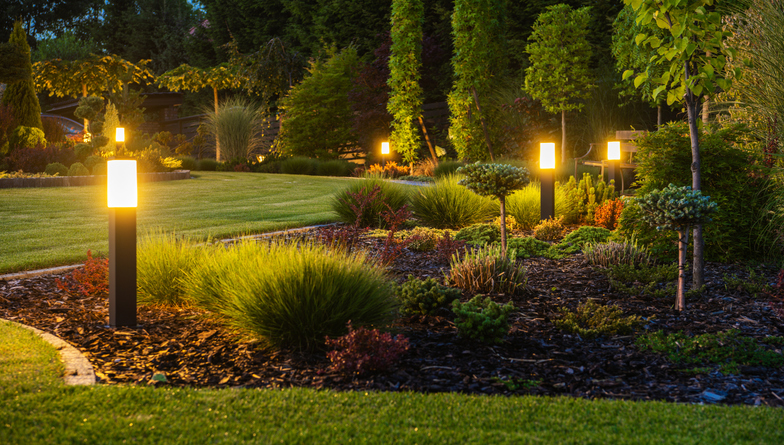
Landscape lighting highlights trees, garden beds, walkways, and water features with a softer, decorative glow. Common fixtures include path lights, uplights, step lights, and flush-mounted well lights.
Security lighting is functional first. Motion-activated floodlights, dusk-to-dawn fixtures near doors and garages, and wide-coverage lighting for driveways and side yards remove the dark corners where someone could go unseen, without lighting your home like a stadium.
Architectural lighting draws attention to the structure of your home, such as columns, stonework, and gables, using uplighting or wall-washing for depth and drama.
The other big decision is the type of system. Low-voltage lighting runs through a transformer that steps household power down to 12 volts. It’s the standard for landscape lighting because it’s safer around walkways and garden beds, more affordable to run, and can be buried at a shallower depth than standard wiring. Line-voltage lighting runs on standard 120-volt household power, which makes it the better fit for bright security floodlights, post lights, and fixtures that need to run at full power over long distances.
Many homes benefit from a hybrid: low-voltage lighting for ambiance and line-voltage lighting at key entry points. Line-voltage work requires proper conduit, burial depth, and GFCI-protected circuits, which is why it should be handled by a licensed electrician.

Don’t worry about electrical issues – our licensed and insured electricians have the expertise to tackle any problem, big or small.


At Wisler, we believe in honest and transparent pricing. We provide detailed estimates upfront so you know exactly what to expect. There are no hidden fees or surprises.

Your satisfaction is our priority. We are committed to providing exceptional customer service and ensuring that all your plumbing needs are met with professionalism and care. Our goal is to establish lasting relationships with our clients based on trust and reliability.

The cost depends on your property size, the number of fixtures, and whether you choose low-voltage lighting, line-voltage lighting, or both. Wisler gives you one flat-rate price before any work begins, so you’ll know the full cost up front and won’t see surprises when the job is done.
Both are great options. It depends on what you’re lighting. Low-voltage is safer and more affordable for landscape and accent lighting, while line-voltage is better for security floodlights and fixtures that need more power. Many homes use both.
Simple, temporary additions like plug-in string lights are fine as DIY projects. Anything involving buried wiring, hardwired fixtures, or a connection to your electrical panel should be done by a licensed electrician to meet code and stay safe.
Common warning signs include flickering or dead fixtures, exposed or cracked wiring, corroded connections, and outlets without GFCI protection. If you notice any of these, have a licensed electrician inspect your system.
A GFCI (ground-fault circuit interrupter) cuts power in a fraction of a second if it detects electricity flowing where it shouldn’t, such as through water. Because outdoor wiring is exposed to rain and moisture, GFCI protection greatly reduces the risk of serious shock. Older exterior circuits often don’t have it.
Yes. LED fixtures use far less energy than halogen or incandescent lights, often around 75% less, and they last much longer. Pairing them with motion sensors or timers cuts costs even further, especially compared to older floodlights left on all night.
Yes, modern lighting systems can be scheduled, automated, or triggered by motion sensors, and many can be controlled from a smartphone. This lets you set an “away mode” while traveling or check on your lights from anywhere. Your Wisler electrician can recommend options that fit your home.
Yes. Wisler designs and installs landscape, security, and architectural lighting, and can combine them into one cohesive plan tailored to your property.